Meghalaya's root bridges: the trek nobody warns you about
The double-decker bridge at Nongriat is 3,000 steps down and 3,000 back up. What to know before you commit to the day.
It is a staircase, not a walk
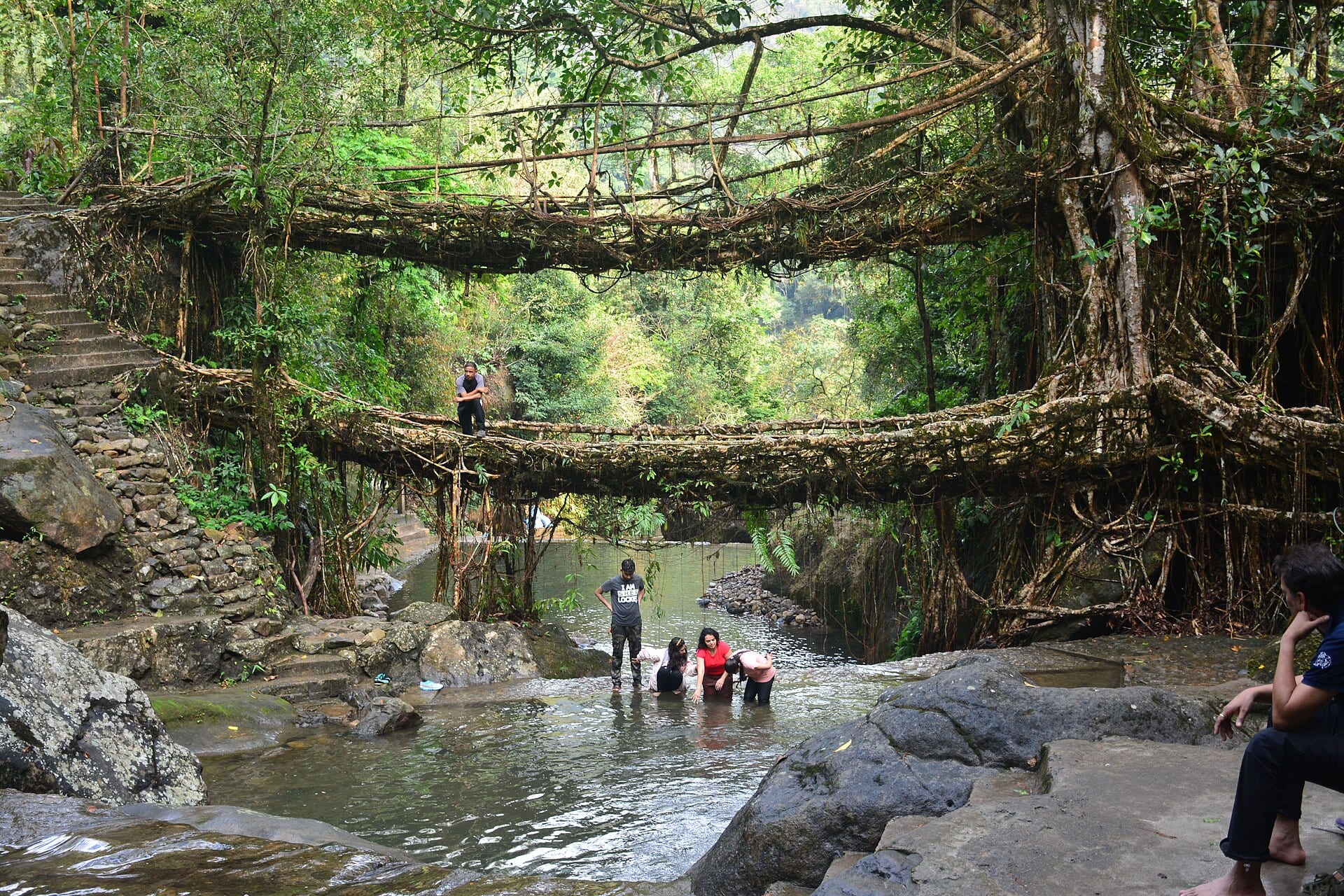
The double-decker root bridge sits in Nongriat, below Tyrna village near Cherrapunji, and the only way in is on foot down a concrete staircase of roughly 3,000 steps. Going down takes most people about ninety minutes. Coming back up takes two hours or more and is genuinely hard on the knees and lungs.
This is not a scenic stroll to a viewpoint. Treat it as a day's trek: proper shoes, two litres of water, and an early start so you are not climbing out in the afternoon heat.
Stay the night at the bottom
The single best decision on this trip is to sleep in Nongriat rather than turning straight around. There are simple guesthouses in the village, and staying means you see the bridge in the early morning without the day-trippers, and you can walk on to the Rainbow Falls — another hour each way and quieter than the bridge itself.
It also splits the climb across two days, which your legs will notice.
The single-decker option
If 6,000 steps is not the holiday you had in mind, the root bridge at Mawlynnong is a short flat walk from the village and gives you the idea without the descent. Riwai, nearby, is similar.
They are smaller and busier, and they are not the same experience — but they are a genuine alternative rather than a consolation prize.
Go just after the rain
Cherrapunji and Mawsynram are among the wettest places on earth and the monsoon here runs June to September in earnest. Trekking then is miserable and the steps are treacherous.
October and November are the window: the waterfalls are still at full volume from the monsoon, the leeches have gone, and the air is clear enough to actually see across the valleys into Bangladesh.